
by Dr. Lakhbir K. Jassal
There are objects that survive us, objects that wait. And sometimes—after decades of silence—an object begins to breathe again.
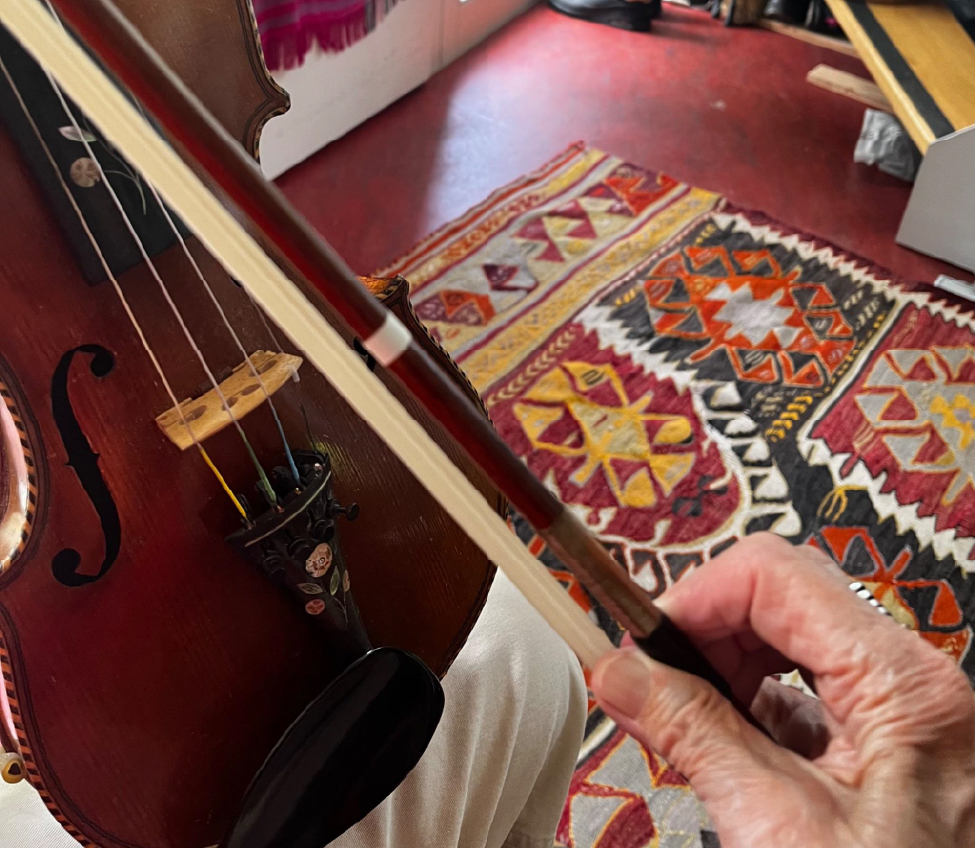
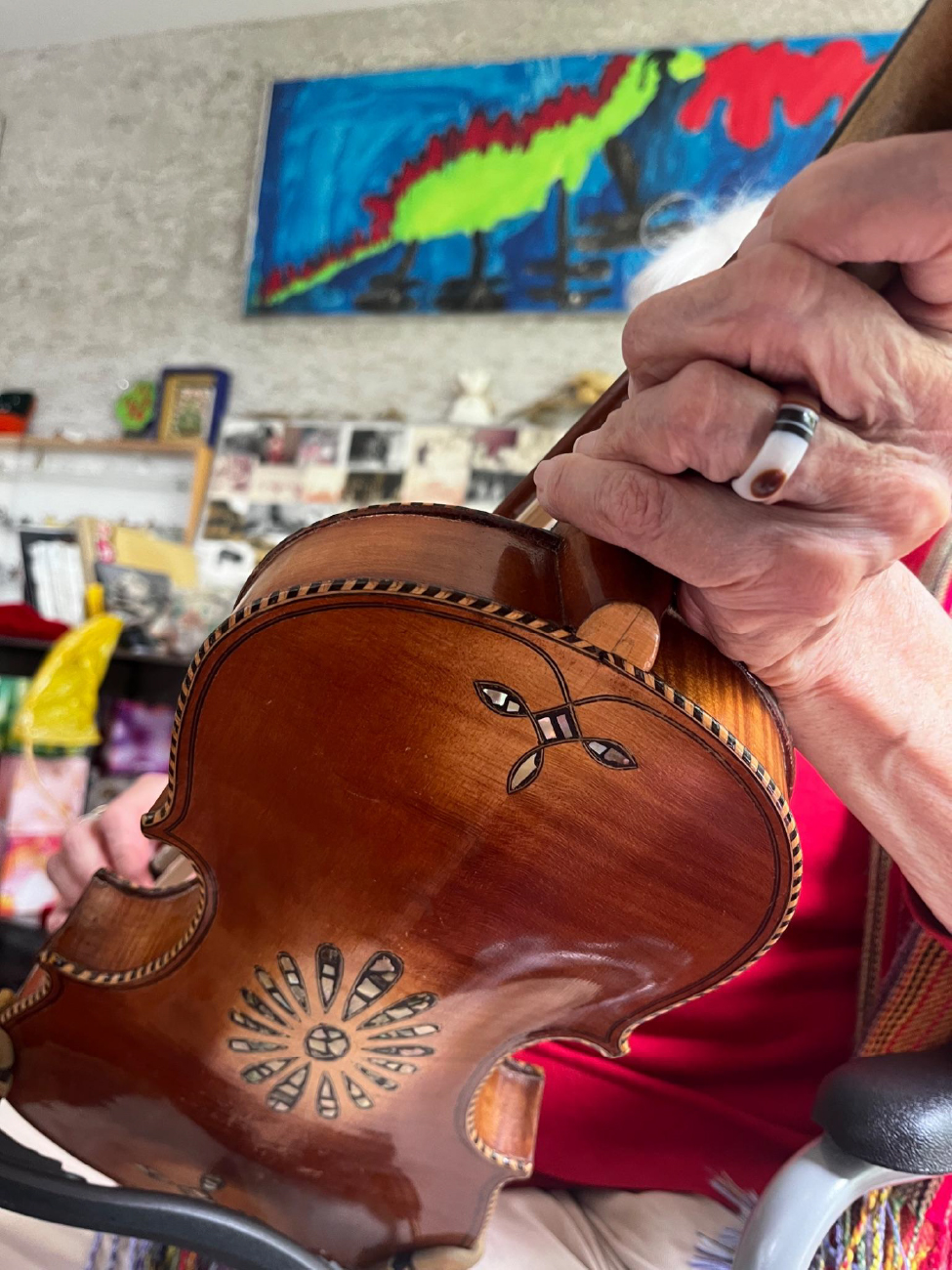
In a quiet home in Zurich, a violin has awakened. Its wood, darkened by time and touched by sorrow, remembers the hands of a German Romani man who once played it before he was taken into the machinery of the Holocaust. Today, after more than eighty years of stillness, its voice rises once more under the care of Anna Kohler, well-known and established Jungian therapist and long?time resident of the city. She has become the guardian of both the instrument and the story it carries.
The violin’s journey is as fragile as its varnish. It was safeguarded during the Second World War by the uncle of a Swiss woman living in the then Baden-Wurttemberg: a man who kept it safe after its Romani owner was deported. No name remains. No photograph. No written trace. Only the violin survived, an orphaned witness to a life erased.
It’s worth remembering that not every life leaves a tidy trail of documents. When people are forced to move, the record of their existence scatters. Anyone who has lived on the move knows this: when the future turns dark and slips beyond your control, the first things lost are the papers meant to prove you were ever there.
The violin remains one of the few surviving witnesses of this man’s existence. His life, like so many Romani lives, was swallowed by the Porajmos, the Romani genocide, rooted in racial ideology and bureaucratic precision.
According to Marushiakova & Popov (2016): “across Europe, many communities identify as Roma and speak Romani ?hib (Romanes)—a language woven from memory, movement, and resilience. Their identity is diverse, adaptive, and deeply connected to cultural expression”.
And at the heart of that expression is music.
For Romani communities, music has long been:
- A vessel of memory, carrying stories and emotions across generations.
- A livelihood, shaping the musical traditions of Central and Eastern Europe.
- A form of resistance, a declaration of humanity even in the darkest hours.
In the camps, when everything else was stripped away, music often remained the final thread of dignity. Instruments like this violin were not merely tools, they were lifelines.
Now restored, the violin’s sound is warm, fragile, and resonant. It carries the echo of a man whose name we do not know, yet whose spirit vibrates in every note. For Anna Kohler, the instrument is both a personal inheritance and a collective responsibility.
“Playing this violin feels like opening a door that has been locked for generations”, she reflects. “Its music is a reminder that even when a life is erased, its spirit can still be heard”.
When Anna plays this violin she allows its melodies unfurl like breath returning to a long?silent room. The violin’s story, once buried, begins to rise.
She is exploring where this historically significant instrument might one day belong: a museum, a memorial institution, a cultural archive. A place where its voice can continue to speak.
For now, the violin remains with Anna, who honours its legacy by allowing its music to live again—after so many years of silence.
And with each bright, steady note, the instrument steps back into the world it once knew, reminding us that history is not only what survives, but what we choose to carry forward with care, gratitude and light.